

How to Clean and Maintain Your Spice Grinder
- Posted on
A well-maintained spice grinder delivers years of reliable performance, producing consistently ground spices that transform your cooking with vibrant flavors and aromatic complexity. However, the very oils and pigments that make spices so flavorful also create maintenance challenges. Residual spice oils leave lingering aromas that can cross-contaminate subsequent grindings, while pigmented spices like turmeric create stubborn stains that resist casual cleaning. Proper cleaning and maintenance techniques ensure your grinder performs optimally while preventing flavor contamination and extending its functional lifespan.
This comprehensive guide covers everything you need to know about cleaning and maintaining both electric and manual spice grinders, from daily quick-cleaning routines to deep cleaning methods that restore like-new performance. Whether you use your grinder daily or occasionally, these techniques will help you maximize its value and ensure every grinding session produces pure, uncontaminated spice flavors.
Understanding Why Cleaning Matters
Flavor Contamination Prevention
Spice oils are remarkably persistent. The aromatic compounds that make cumin smell distinctly of cumin or cinnamon unmistakably like cinnamon don't simply disappear after grinding. These oils coat grinding chambers, blades, and burrs, waiting to transfer into the next batch of spices you grind. Without proper cleaning, your freshly ground coriander carries hints of yesterday's cardamom, or your black pepper develops mysterious clove undertones.
This cross-contamination affects recipe authenticity and flavor balance. When you want pure cumin flavor for taco seasoning, residual curry spice notes create confusion rather than harmony. Proper cleaning ensures each spice expresses its true character without interference from previous grindings.
Food Safety Considerations
Spices can harbor bacteria, mold spores, and other contaminants, especially when exposed to moisture. Grinding chambers that aren't cleaned properly can accumulate organic residues that support microbial growth, particularly in humid environments or when wet spices are processed. Regular cleaning removes these potential contamination sources, ensuring your spice grinder remains food-safe.
For users with food allergies or those following strict dietary restrictions (kosher, halal, vegetarian), thorough cleaning prevents cross-contamination of allergens or prohibited substances between different spice grinding sessions.
Performance Maintenance
Accumulated spice residues and oils can gum up grinding mechanisms, reducing efficiency and potentially damaging components. Blade grinders become less effective when blades are coated with sticky residue. Burr grinders lose adjustment precision when spice particles jam between grinding surfaces. Regular cleaning maintains optimal performance and prevents mechanical issues that could shorten your grinder's lifespan.
Aesthetic Considerations
Turmeric's vibrant yellow pigment, paprika's deep red, and other intensely colored spices create persistent staining that affects your grinder's appearance. While purely cosmetic, these stains can make quality equipment look old and poorly maintained. Proper cleaning techniques minimize visible staining, keeping your grinder looking newer longer.
Cleaning Electric Blade Grinders
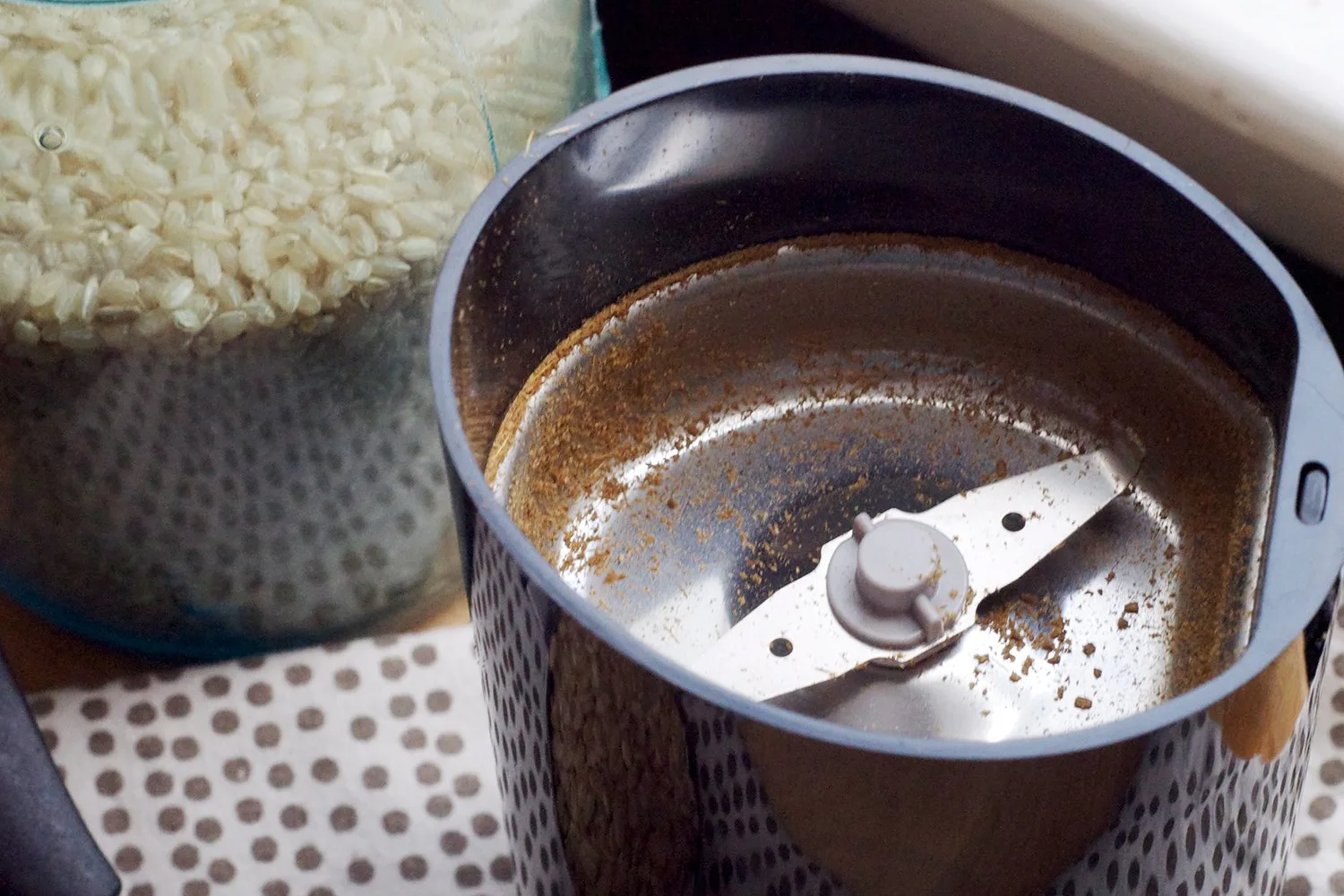
:max_bytes(150000):strip_icc()/how-to-clean-a-coffee-grinder-5093606-05-a3516141b8af48b2902e7dfddf35a1d1.jpg)
Daily Quick-Clean Method
After each use, follow this simple routine to prevent buildup:
Step 1: Empty Completely - Immediately after grinding, empty all ground spices from the chamber. Tap the grinder gently against your hand or countertop to dislodge particles clinging to walls and blade.
Step 2: Dry Brush - Use a clean, dry pastry brush or small cleaning brush to sweep remaining particles from the chamber, paying special attention to areas around the blade base where spices accumulate.
Step 3: Dry Wipe - Wipe the chamber interior with a dry paper towel or clean cloth, removing oils and fine particles the brush missed.
Step 4: Check the Blade - Examine the blade for stuck particles or residue buildup. Use a toothpick or brush to dislodge any trapped material.
This quick routine takes under two minutes and prevents most buildup issues when performed consistently.
The Rice Cleaning Method
The rice cleaning technique is legendary among spice grinder users for good reason—it works exceptionally well for removing oils, odors, and fine residues:
Step 1: Add Rice - Place 1/4 cup of uncooked white rice (not instant) into the completely dry grinding chamber.
Step 2: Grind Thoroughly - Run the grinder until the rice becomes fine powder, typically 30-60 seconds. The rice particles scour the chamber walls and blade surfaces, absorbing oils and dislodging stuck residues.
Step 3: Empty Rice Powder - Discard the rice powder (which will likely be colored by absorbed spice pigments).
Step 4: Repeat if Necessary - For heavily soiled grinders, run a second batch of rice until the resulting powder shows minimal discoloration.
Step 5: Final Wipe - Wipe the chamber with a damp cloth to remove any remaining rice dust, then dry thoroughly.
This method effectively cleans without introducing moisture to electrical components. Perform it weekly for regularly used grinders or after grinding particularly aromatic or oily spices.
Deep Cleaning for Stubborn Residues
When rice cleaning isn't sufficient, more intensive approaches tackle stubborn buildup:
Baking Soda Scrub:
- Mix 2 tablespoons baking soda with enough water to form a paste
- If your grinder has a removable grinding chamber, remove it according to manufacturer instructions
- Apply the paste to chamber surfaces and blade (avoiding electrical connections)
- Use a soft brush or cloth to gently scrub, paying attention to stained areas
- Wipe clean with a damp cloth
- Dry completely before reassembling
Lemon and Salt Method:
- Add 1 tablespoon coarse salt and juice of half a lemon to the chamber
- Pulse briefly to distribute the mixture
- Let sit for 5 minutes
- Wipe thoroughly with damp cloth
- Rinse removable components if applicable
- Dry completely
Dealing With Persistent Stains
Turmeric stains are notoriously stubborn. While they don't affect functionality, they bother many users aesthetically:
For Plastic Components:
- Make a paste of baking soda and water
- Apply generously to stained areas
- Let sit in direct sunlight for several hours (UV light helps break down pigments)
- Scrub and rinse clean
For Metal Components:
- White vinegar often removes staining from stainless steel
- Apply with cloth, let sit briefly, then wipe clean
- Dry thoroughly to prevent water spots
Remember that some staining is inevitable with regular use. As long as the grinder is functionally clean (no residue buildup affecting performance or flavor), aesthetic staining doesn't indicate a problem.
Cleaning Manual Burr Grinders

After-Use Routine
Manual burr grinders require different cleaning approaches than blade grinders:
Step 1: Empty Completely - Remove all ground spices from both the grinding chamber and collection area.
Step 2: Brush Burrs - Use a small, stiff brush (old toothbrushes work well) to brush away particles from burr surfaces. Pay attention to grooves and grinding surfaces where particles lodge.
Step 3: Check Adjustment Mechanism - Ensure no spice particles are stuck in the adjustment mechanism, as this can affect grind settings.
Step 4: Wipe Exterior - Clean the exterior with a damp cloth, drying immediately.
Disassembly for Deep Cleaning
Periodically disassemble your manual grinder for thorough cleaning:
Step 1: Consult Instructions - Review manufacturer instructions for proper disassembly procedure, as mechanisms vary significantly between models.
Step 2: Remove Burrs - Carefully remove burr components, noting their orientation for correct reassembly.
Step 3: Clean Each Part - Wash removable parts with warm, soapy water (if materials allow—check manufacturer specifications). Use a brush to scrub burr grooves and grinding surfaces.
Step 4: Dry Completely - This step is critical. Any remaining moisture can rust metal components or create conditions for mold growth. Air dry for several hours or dry thoroughly with clean towels.
Step 5: Reassemble Carefully - Follow manufacturer instructions to reassemble correctly, ensuring all components seat properly.
Perform deep cleaning monthly for frequently used grinders, quarterly for occasional use.
Cleaning Mortar and Pestle Sets

Daily Cleaning
Mortar and pestle cleaning depends heavily on material:
Stone (Granite, Marble):
- Rinse with warm water immediately after use
- Scrub with stiff brush to remove particles from textured surfaces
- For stubborn residues, add coarse salt as an abrasive and scrub
- Rinse thoroughly and air dry completely
- Note: Many stone mortars and pestles shouldn't use soap, as porous material absorbs it
Ceramic:
- Wash with warm, soapy water
- Most ceramic mortars and pestles are dishwasher safe
- Scrub textured surfaces to remove embedded particles
- Dry thoroughly
Wood:
- Wipe clean with damp cloth
- Never soak or submerge in water
- Occasionally treat with food-safe mineral oil to prevent drying and cracking
- Air dry completely before storing
Dealing With Absorbed Odors and Colors
Stone mortars and pestles develop patina over time—some cooks value this "seasoning" while others prefer pristine appearance:
To Maintain Seasoning:
- Clean with water and brush only
- Accept gradual darkening and oil absorption as character development
- The absorbed oils actually prevent future sticking
To Remove Staining and Odors:
- Grind a mixture of dry rice and coarse salt, then discard
- Make a paste of baking soda and water, scrub thoroughly
- For persistent odors, grind fresh garlic or ginger, discard, then clean normally
- Sunlight exposure helps fade staining in stone mortars
Maintenance Beyond Cleaning
Blade Sharpening and Replacement
Electric grinder blades eventually dull with use. While you cannot sharpen them at home, replacement blades are often available from manufacturers. Signs that blades need replacing include:
- Significantly longer grinding times for same spice quantities
- Increasingly uneven grinding with more large fragments
- Unusual noises during operation
- Visible damage or deformation of blade edges
Burr Maintenance
Quality burr grinders feature long-lasting grinding mechanisms, but maintenance extends their lifespan:
- Keep burrs clean of buildup that can accelerate wear
- Avoid grinding extremely hard materials (like some dried chilies with seeds) that can chip ceramic burrs
- Check for loose mounting screws occasionally
- Replace burrs if grinding becomes noticeably uneven despite cleaning
Motor Care for Electric Grinders
Protect electric grinder motors:
- Never run the motor continuously for more than 30-60 seconds
- Allow cooling periods between grinding sessions
- Don't overload the chamber beyond rated capacity
- Keep exterior vents clear of debris
- Never immerse the motor housing in water
Storage Best Practices
Proper storage protects your investment:
- Store grinders in dry locations away from humidity
- Keep electric grinders unplugged when not in use
- Store manual grinders with grinding mechanisms slightly loose to prevent compression wear
- Ensure grinders are completely dry before storing to prevent mold growth
- Consider storing with a moisture-absorbing packet in humid climates
Troubleshooting Common Issues
Grinder Won't Turn On (Electric)
- Check power connection
- Ensure safety interlocks are engaged properly
- Look for tripped circuit breakers
- Inspect cord for damage
- Check for overload protection reset button
Grinding Quality Degraded
- Deep clean to remove buildup
- Check for worn blades or burrs
- Verify motor is running at full speed
- Ensure you're not overloading the chamber
- Try grinding smaller quantities for more even results
Persistent Odors Despite Cleaning
- Run rice cleaning method multiple times
- Try the lemon-salt cleaning method
- For manual grinders, disassemble completely and clean all components
- Consider dedicating separate grinders for very aromatic spices (cinnamon, cloves) versus more neutral spices
- Ensure grinder is completely dry, as moisture amplifies odors
Unusual Noises
- Check for foreign objects in grinding chamber
- Verify all components are properly assembled
- Listen for bearing wear (grinding or squealing sounds)
- Ensure blade or burr mounting is secure
- Consult manufacturer if noises persist
Creating a Cleaning Schedule
Develop a maintenance routine based on usage frequency:
Daily Use:
- Quick clean after every use
- Rice cleaning weekly
- Deep clean monthly
- Full disassembly and inspection quarterly
Weekly Use:
- Quick clean after every use
- Rice cleaning after grinding aromatic spices
- Deep clean monthly
- Full disassembly semi-annually
Occasional Use:
- Quick clean after every use
- Rice cleaning between uses if different spice types
- Deep clean every 3-4 months
- Full disassembly annually
Conclusion
Proper cleaning and maintenance keeps your spice grinder performing optimally while ensuring pure, uncontaminated spice flavors in every grinding session. From quick daily routines that prevent buildup to deep cleaning methods that restore like-new performance, these techniques extend your grinder's functional lifespan while protecting your investment. Regular maintenance takes just minutes but pays dividends through years of reliable service and consistently excellent results.
Ready to enhance your cooking with freshly ground spices? Explore our collection of spice grinders featuring quality electric and manual options built for durability and easy maintenance. With the right grinder and proper care, you'll enjoy the transformative flavor enhancement of freshly ground whole spices for years to come, elevating every dish with vibrant aromas and complex flavors that pre-ground alternatives simply cannot match.