

Wood vs Composite Cutting Boards: Epicurean vs Traditional Options
- Posted on
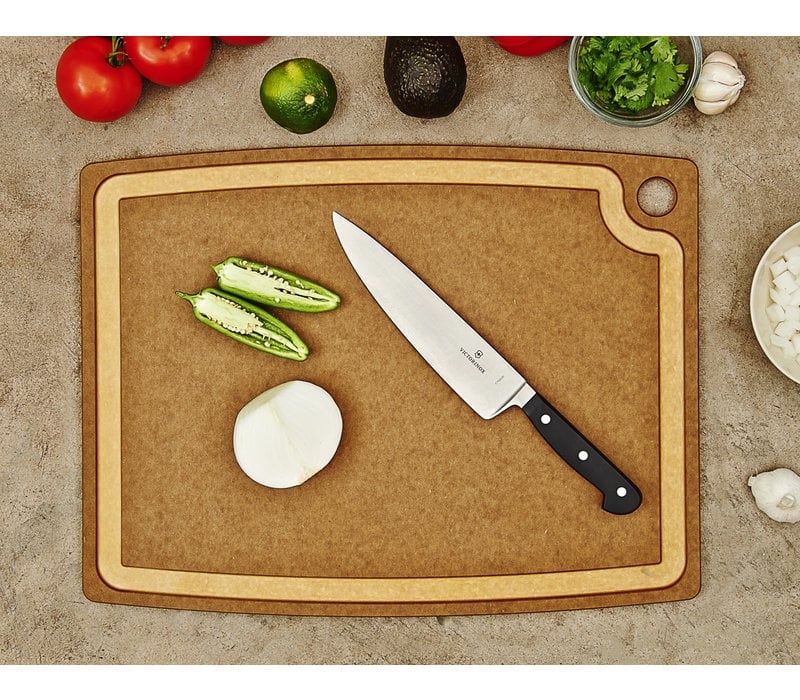
The cutting board you choose affects knife performance, kitchen hygiene, maintenance routines, and environmental impact. While traditional wooden cutting boards have dominated kitchens for centuries, modern composite materials like those used in Epicurean boards offer compelling alternatives that challenge conventional wisdom about what makes an ideal cutting surface. Understanding the fundamental differences between wood and composite cutting boards helps you make informed decisions aligned with your cooking habits, lifestyle, and values.
This comprehensive guide explores the characteristics, advantages, and limitations of both traditional wooden cutting boards and innovative composite options like Epicurean, examining everything from knife preservation and food safety to sustainability and long-term cost considerations.
Understanding Traditional Wood Cutting Boards
Natural Material Benefits
Wood has served as the premier cutting board material for good reason. High-quality hardwoods like maple, walnut, and cherry provide naturally antimicrobial surfaces that actively inhibit bacterial growth. Research from food science laboratories has demonstrated that wooden cutting boards actually pull bacteria down into the wood fibers where the bacteria eventually die, rather than allowing them to proliferate on the surface as happens with some synthetic materials.
The natural grain structure of wood creates knife-friendly surfaces that preserve blade edges far better than hard materials like glass, ceramic, or stone. Wood's moderate hardness—firm enough to provide stable cutting surfaces yet soft enough to yield slightly to knife edges—makes it ideal for protecting expensive culinary investments while ensuring safe, efficient food preparation.
Wood also offers aesthetic warmth and organic beauty that synthetic materials struggle to replicate. Each wooden cutting board is unique, featuring individual grain patterns, color variations, and natural characteristics that give it personality and visual appeal. Many cooks appreciate this connection to natural materials and traditional craftsmanship.
Traditional Maintenance Requirements
Wooden cutting boards demand regular maintenance to preserve their functionality and appearance. Monthly oiling with food-safe mineral oil or specialized cutting board conditioners prevents the wood from drying out, cracking, and warping. The oiling process replenishes moisture, maintains wood flexibility, and creates protective barriers against water absorption during washing.
After each use, wooden boards require hand washing with mild soap and warm water, followed by immediate thorough drying. Standing boards on edge promotes air circulation and prevents moisture accumulation that can lead to warping or mold growth. Wooden cutting boards must never go in dishwashers, as the intense heat and prolonged water exposure cause irreversible damage including splitting, warping, and delamination of glued sections.
These maintenance requirements represent meaningful time commitments for busy cooks. However, many enthusiasts find the ritual of caring for wooden boards meditative and satisfying—a way to slow down and appreciate quality kitchen equipment.
Longevity and Character Development
Properly maintained wooden cutting boards last for generations, developing rich patina and character that tell stories of thousands of meals prepared. The boards become family heirlooms passed down through generations, connecting people to culinary traditions and family histories. As wood ages, it often deepens in color and develops attractive wear patterns that many cooks cherish.
When surfaces become excessively marked or rough, wooden boards can be sanded to restore smooth, like-new cutting surfaces. This renewability extends functional lifespan indefinitely, making wooden boards exceptional long-term investments despite higher initial costs.
Understanding Composite Cutting Boards: The Epicurean Innovation

Revolutionary Material Engineering
Epicurean cutting boards represent a significant innovation in cutting board technology. Made from wood fiber composite material—essentially compressed paper derived from sustainably harvested North American wood—bonded with food-safe resin, these boards combine natural wood origins with modern material science.
The manufacturing process creates uniform, non-porous surfaces with consistent properties throughout the board. Unlike solid wood with natural variations in grain density, hardness, and porosity, composite boards offer predictable performance characteristics that don't vary across the cutting surface or between individual boards.
This engineered consistency appeals to cooks who value reliability and standardization. Every spot on the board performs identically, and replacement boards deliver identical characteristics to the originals.
Knife-Friendly Performance
Despite being composite materials, Epicurean boards are surprisingly gentle on knife edges. The wood fiber content creates surfaces softer than hard plastics, bamboo, or composite materials made with mineral fillers. While not quite as forgiving as premium end grain wooden boards, Epicurean surfaces preserve blade sharpness significantly better than plastic cutting boards or other synthetic alternatives.
Professional chefs and serious home cooks report that Epicurean boards occupy a middle ground between wood and plastic in terms of knife preservation—not as ideal as top-tier wooden boards but far superior to traditional plastic options. For cooks who sharpen knives regularly as part of routine maintenance, the difference may be negligible in practical terms.
Zero-Maintenance Convenience
The most dramatic advantage Epicurean boards offer is freedom from traditional cutting board maintenance rituals. These boards never require oiling, conditioning, or special treatment. The non-porous composite material doesn't absorb moisture, oils, or food particles, eliminating concerns about bacterial harboring in wood grain or proper hydration maintenance.
Epicurean boards are fully dishwasher safe, withstanding high temperatures and harsh detergents that would destroy wooden boards. This makes sanitization effortless—simply place boards in the dishwasher after use and retrieve them clean, dry, and ready for the next meal. For busy households, commercial kitchens with health department regulations, or anyone who values convenience, this dishwasher compatibility represents transformative practicality.
The boards also tolerate heat exposure up to 350°F, allowing you to place hot pots and pans directly on surfaces without damage. This heat resistance adds versatility that wooden boards cannot match.
Thin Profile and Lightweight Design
Epicurean boards are remarkably thin and lightweight compared to traditional wooden cutting boards. Standard Epicurean boards measure just 1/4 to 3/8 inch thick, while wooden boards typically range from 3/4 to 3 inches thick. This reduced profile makes Epicurean boards easy to store in cabinet slots, drawer organizers, or narrow spaces between appliances.
The light weight facilitates easy handling, cleaning, and storage. Moving boards from cabinet to workspace to dishwasher requires minimal effort. For cooks with limited strength, mobility challenges, or simply preference for lightweight tools, this accessibility advantage is significant.
However, the thin profile and light weight mean these boards don't have the substantial presence and inherent stability of heavy wooden boards. Epicurean includes rubber feet or non-slip features on many models to prevent sliding during use.
Environmental Sustainability
Epicurean proudly promotes environmental credentials. The boards are made from sustainably harvested North American wood fiber—essentially recycled wood processing byproducts—diverted from landfills and transformed into functional products. The manufacturing process occurs in the United States using energy-efficient methods.
The boards are also recyclable at end of life, completing a cradle-to-cradle sustainability story. For environmentally conscious consumers, Epicurean's commitment to sustainability combined with long functional lifespan creates compelling eco-friendly credentials.
Direct Comparison: Wood vs Composite
Knife Preservation
Winner: Wood (Especially End Grain)
Traditional wooden cutting boards, particularly end grain construction, provide superior knife preservation. The wood fibers yield to blade edges and self-heal, minimizing microscopic blade damage. Epicurean boards are knife-friendly for composite materials but cannot match wood's blade-preserving characteristics.
Practical Impact: For professional chefs processing commercial volumes or home cooks with expensive Japanese knives, the difference matters significantly. For casual cooks who sharpen knives periodically, the difference is less consequential.
Maintenance Requirements
Winner: Epicurean
No contest—Epicurean boards require virtually zero maintenance beyond washing. No oiling, no special drying procedures, no storage concerns. Wooden boards demand monthly oiling, careful hand washing, thorough drying, and mindful storage to prevent damage.
Practical Impact: For busy households, people who dislike maintenance tasks, or commercial operations needing quick turnaround sanitization, Epicurean's convenience is transformative.
Dishwasher Compatibility
Winner: Epicurean
Epicurean boards are fully dishwasher safe and actually benefit from the high-temperature sanitization dishwashers provide. Wooden boards are strictly hand-wash only, as dishwashers cause irreversible damage.
Practical Impact: For households heavily reliant on dishwashers or commercial kitchens requiring certified sanitization, this single feature may be decisive.
Aesthetics and Character
Winner: Wood
Wooden cutting boards offer warmth, natural beauty, unique grain patterns, and character that synthetic materials cannot replicate. Each wooden board is distinctive with individual personality. Epicurean boards, while available in attractive slate and natural colors, have uniform industrial appearance that lacks wood's organic appeal.
Practical Impact: For cooks who value kitchen aesthetics and connection to natural materials, wood's beauty justifies maintenance requirements. For purely functional users, appearance matters less.
Longevity
Winner: Tie (With Caveats)
Both can last decades. Wooden boards last generations with proper maintenance and can be renewed through sanding. Epicurean boards last many years with zero maintenance but cannot be refinished—once worn, they must be replaced.
Practical Impact: Wooden boards offer indefinite lifespan with care investment. Epicurean boards offer long lifespan without care but finite service life.
Food Safety and Sanitation
Winner: Context-Dependent
Wood possesses natural antimicrobial properties and pulls bacteria into fibers where they die. However, improper maintenance can create bacterial harboring conditions. Epicurean's non-porous surface prevents bacterial penetration and tolerates dishwasher sanitization but lacks wood's active antimicrobial properties.
Practical Impact: Both are safe when used properly. Wood requires proper maintenance; Epicurean requires thorough washing. Commercial operations may prefer Epicurean's certifiable sanitization.
Staining and Appearance Retention
Winner: Epicurean
Composite boards resist staining from colorful foods far better than wood, especially light-colored woods like maple. Epicurean's non-porous surface prevents absorption of pigments, oils, and odors. Wooden boards gradually develop stains, discoloration, and absorbed odors despite proper care.
Practical Impact: For cooks bothered by appearance changes or who frequently prepare highly pigmented foods, Epicurean maintains pristine appearance longer.
Heat Resistance
Winner: Epicurean
Epicurean boards tolerate heat up to 350°F, serving double duty as trivets for hot cookware. Wooden boards are damaged by heat exposure, developing burns, scorches, or cracks from thermal stress.
Practical Impact: Adds versatility for placing hot items, though this shouldn't replace dedicated trivets for very hot cookware.
Weight and Portability
Winner: Epicurean
Epicurean boards are dramatically lighter and easier to handle, transport, and store. Wooden boards, especially end grain construction, can weigh 20+ pounds and require substantial effort to move.
Practical Impact: Matters significantly for those with limited strength, small storage spaces, or desire for portable boards.
Environmental Impact
Winner: Context-Dependent
Both have legitimate sustainability stories. Wood is renewable, biodegradable, and natural but requires tree harvesting and processing. Epicurean uses recycled wood fiber, is made domestically with efficient processes, and is recyclable, but involves synthetic resin binders.
Practical Impact: Both are reasonable choices for environmentally conscious consumers. Wood appeals to natural material purists; Epicurean appeals to recycled content advocates.
Price Considerations
Winner: Epicurean (Initially)
Epicurean boards typically cost less than comparable-sized quality wooden boards, especially end grain construction. However, wooden boards can be refinished indefinitely while Epicurean boards eventually require replacement.
Practical Impact: Epicurean offers lower entry cost; wood offers lower lifetime cost with maintenance commitment.
Ideal Use Cases
Choose Traditional Wood If You:
- Own high-quality knives deserving optimal care
- Appreciate natural materials and organic aesthetics
- Don't mind regular maintenance routines
- Value boards that develop character over time
- Want boards that last generations
- Prioritize maximum knife preservation
- Enjoy connection to traditional craftsmanship
- Have space for substantial, heavy boards
Choose Epicurean Composite If You:
- Prioritize convenience and low maintenance
- Rely heavily on dishwashers
- Need multiple affordable boards
- Have limited storage space
- Prefer lightweight, portable boards
- Want consistent, predictable performance
- Need heat-resistant surfaces
- Value environmental sustainability
- Run commercial operations requiring certified sanitization
- Frequently prepare highly staining ingredients
The Hybrid Approach
Many cooks find that maintaining both types of cutting boards captures the best of both worlds. A large wooden board serves as the primary prep surface for daily cooking, protecting knives while providing ample workspace and aesthetic appeal. Smaller Epicurean boards handle quick tasks, dedicated purposes (garlic prep, raw meat processing), or situations where dishwasher sanitization is desired.
This approach maximizes practicality—use the right tool for each specific need—while managing maintenance burden through strategic allocation of tasks to appropriate boards.
Making Your Decision
The choice between wood and composite cutting boards ultimately depends on your personal priorities. If knife preservation, aesthetics, and traditional values top your list, quality wooden boards justify their maintenance requirements. If convenience, versatility, and modern performance characteristics drive your decisions, Epicurean composite boards deliver exceptional value.
Neither choice is wrong—they simply serve different needs and preferences. Understanding the objective differences empowers you to select boards aligned with your cooking style, lifestyle constraints, and personal values.
Conclusion
The evolution of cutting board technology has given cooks more options than ever before. Traditional wooden cutting boards continue to excel in knife preservation, aesthetic appeal, and longevity while demanding regular maintenance. Modern composite boards like Epicurean offer revolutionary convenience, versatility, and consistent performance while sacrificing some of wood's knife-friendly characteristics and organic beauty.
Rather than viewing this as wood versus composite competition, consider it an expansion of possibilities. Today's cooks can thoughtfully select cutting boards that match specific needs—wood for primary prep work with quality knives, composite for convenience tasks and specialized uses.
Ready to explore both traditional and innovative cutting board options? Browse our comprehensive collection of cutting boards featuring premium wooden boards from trusted manufacturers alongside innovative Epicurean composite options. Find the perfect cutting surfaces that balance performance, convenience, aesthetics, and value for your unique culinary workspace.